
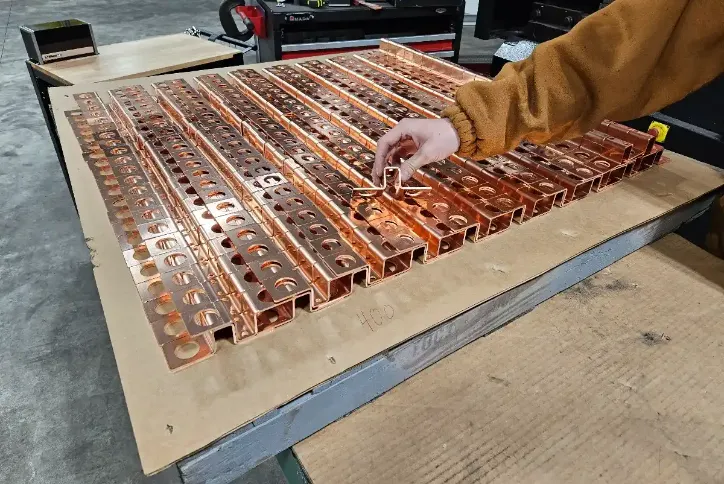
Sheet metal products run the gamut from cheaply made universal parts, like brackets, to highly complex custom-made parts for critical applications. It is clear on either end of the manufacturing spectrum which applications can use an off-the-shelf product and which require customization. It is the middle of the range where decisions must be made. Here, we will discuss when custom sheet metal fabrication makes sense and why it results in better products.
The Part Fits the Actual Application
Off-the-shelf components are designed for broad use. That can work when the part has a basic support, cover, or mounting function. It becomes a problem when the part must account for space constraints, operating conditions, access points, surrounding components, service needs, or the intended use of the finished product.
Custom sheet metal fabrication allows the part to be designed around the product instead of forcing the product to work around a standard component. Engineers can account for clearance, airflow, drainage, handling, fastening approach, maintenance access, exposure, and load path early in the design. The result is a part that fits the way the product needs to function.
Material Selection Meets the Application
Off-the-shelf sheet metal components are often available in limited materials and thicknesses. The choice of metal affects performance, durability, and cost-effectiveness, as well as the component’s functionality and longevity. Custom sheet metal fabrication lets you choose the material that best meets your application’s needs. Components that require high strength may need carbon steel, but if corrosion resistance is the primary issue, aluminum or stainless steel may be better options. When the component is custom-designed, engineers can select a material based on its functionality, operating environment, and life expectancy.
Tolerances Can Be Controlled Where They Matter
Off-the-shelf sheet metal components are made for general use, so their tolerances are often broad enough to work across multiple applications. That flexibility can create problems when the part must align with specific mounting holes, mating surfaces, enclosure dimensions, brackets, hinges, covers, or internal components. A hole that is slightly off, a bend angle that varies, or a flange that sits out of position can affect how the final product assembles and performs.
Custom sheet metal fabrication allows tighter control over the features that directly affect fit, function, and repeatability. These may include hole location, bend radius, bend angle, slot placement, tab position, edge-to-edge dimensions, and formed features. However, tight tolerances should not be applied everywhere. That can drive up cost without improving the product. The better approach is to define critical tolerances where they affect assembly, clearance, sealing, alignment, load transfer, or cosmetic appearance.
This level of control improves consistency from one part to the next. Assemblers spend less time forcing parts into place, enlarging holes, adding shims, adjusting fasteners, or working around gaps. It also reduces the risk of problems that could move downstream into installation, service, or customer use.
Custom Parts Can Combine Multiple Functions
Custom sheet metal fabrication can combine several separate pieces into a single, better-designed component. A part can include mounting points, tabs, slots, stiffening features, covers, brackets, guards, access openings, or hardware locations in the same design. That can reduce part count and remove extra fasteners, joints, brackets, or secondary assemblies.
This can lead to a better product because every added component creates another potential source of variation, looseness, misalignment, noise, corrosion, or assembly error. When functions are built into one fabricated part, the assembly is simpler and more consistent. It can also reduce weight, shorten build time, and make the product easier to service.
Manufacturing Feedback Improves The Design
One overlooked benefit of custom sheet metal fabrication is the opportunity to get manufacturing feedback before production. A fabricator can review material choice, bend geometry, hole placement, weld requirements, hardware locations, finishing needs, and assembly steps. A manufacturer’s review can identify choices that may create avoidable cost, distortion, scrap, rework, or production delays. When those issues are addressed early, the final part is easier to make, easier to assemble, and better suited to repeat production.
Talk Through Your Custom Sheet Metal Fabrication Project
If a standard part is causing fit, material, tolerance, or assembly problems, custom sheet metal fabrication may be a better option. S&R Sheet Metal can review your part requirements, drawings, materials, and production needs to help you determine the right fabrication approach. Contact S&R to discuss your project and the part requirements that matter most to performance, assembly, and repeat production.