
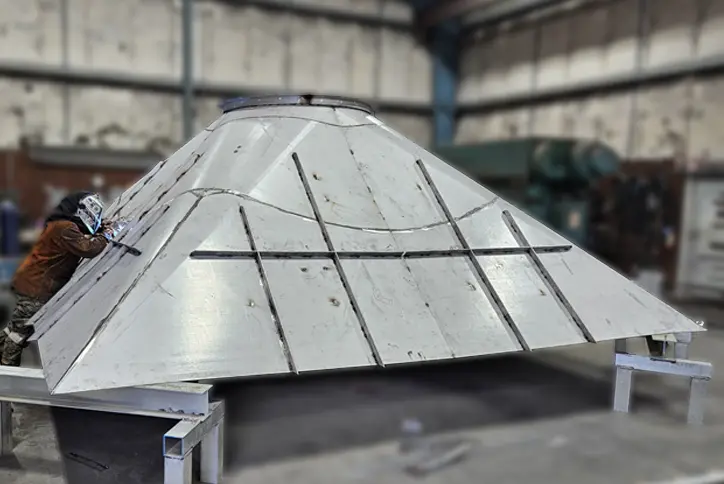
Industrial environments place significant stress on steel components, as they often encounter heavy vibration, temperature fluctuations, moisture, chemicals, and heavy use. If steel fabrication is inconsistent, complications may arise during installation or in use. Issues, such as misaligned holes, warped components, poor welds, and dimensional variation, can derail project timelines, create maintenance issues, and increase labor costs. Industrial buyers should be evaluating more than price alone because fabrication quality directly affects uptime, assembly efficiency, and long-term reliability.
Steel Fabrication Work Requires the Right Partner
Choosing a steel fabrication partner for industrial work also involves evaluating whether the supplier can consistently meet production demands and project requirements. Some fabrication shops may handle simple parts well but struggle with repeatability, complex assemblies, or tighter tolerances. Others may outsource critical processes, resulting in longer lead times and reduced control over quality. Industrial buyers often need a fabrication partner that can support custom requirements, maintain consistency across runs, communicate clearly during projects, and deliver parts on schedule. These factors become increasingly important when fabricated components are tied to larger equipment builds, automation systems, or production schedules.
Key Factors Industrial Buyers Should Evaluate in Steel Fabrication Work
Industrial steel fabrication projects often involve more than producing individual parts. Components must fit correctly within larger assemblies, perform reliably under operating conditions, and arrive on schedule to keep projects moving. Buyers evaluating steel fabrication work are usually looking for a supplier that can maintain consistency across production runs while meeting dimensional, structural, and scheduling requirements. Even small fabrication errors can create delays during assembly, installation, or startup.
While production capabilities are critical, accuracy and repeatability should be one of the first areas buyers evaluate. Consistent, accurate bend angles; correct hole placement; clean cuts; and durable weld quality help reduce assembly issues and field modifications.
Additionally, buyers should evaluate the ability to support both prototype and production quantities. Lead time reliability is another major consideration, particularly for industrial projects tied to shutdown schedules, equipment deliveries, or customer deadlines. Strong communication, quality control processes, and the ability to identify manufacturability concerns early in the project also separate reliable fabrication partners from suppliers that create downstream problems.
Hidden Cost of Poor Fabrication
Poor steel fabrication work can incur costs beyond the quoted price. In industrial settings, hidden costs usually fall into three categories: schedule delays, added labor and expenses, and long-term operational problems. Buyers should consider the total cost of ownership when sourcing steel industrial components, not just the initial fabrication costs.
Schedule Delays – Schedule disruption on industrial projects can cause significant operational and financial consequences. Poor fabrication can lead to:
- Delays during installation or assembly
- Production downtime caused by fitment issues
- Startup delays during commissioning
- Slower equipment integration with other systems
- Additional inspections or verification steps
- Delays affecting other contractors or trades on-site
- Longer maintenance shutdowns due to poorly fitting replacement parts
- Time spent troubleshooting fabrication-related problems
- Customer delivery delays tied to fabrication problems
Increased labor and Project Costs – Poor form, fit, and function in fabricated components increase labor requirements and project costs. Some of the ways these show up include:
- Field modifications during installation
- Additional assembly labor caused by poor tolerances
- Expedited shipping costs for replacement parts
- Production labor lost during delays or rework
- Additional engineering or project management time spent resolving fabrication issues
- Inventory disruptions caused by late or rejected parts
- Extended equipment rental or contractor time due to schedule overruns
- Higher maintenance labor costs caused by improper fit or assembly issues
- Replacement part purchases caused by premature wear or fabrication defects
Long-term operational costs – Fabrication quality can continue affecting equipment long after installation. Long-term operational issues may include:
- Premature wear caused by misalignment or structural stress
- Reduced equipment reliability over time
- Safety risks from weak welds or dimensional inaccuracies
- Inconsistent replacement parts across future production runs
- Maintenance access issues that slow servicing
- Increased vibration or instability in equipment assemblies
- Higher ongoing maintenance requirements
- Reduced production efficiency from improperly fitting components
While not every operational issue can be traced directly to fabrication quality, inconsistent fabrication can increase the likelihood of installation problems, delays, maintenance challenges, and premature component wear.
Why Industrial Buyers Trust S&R For Steel Fabrication Work
Industrial buyers trust S&R Sheet Metal because we understand steel fabrication and the importance of ensuring parts fit the application, hold up in service, and can be repeated when the buyer needs more. Our equipment supports the needs of busy buyers. For example, we use a CNC fiber laser and CNC plasma cutter with 5′ x 10′ tables, and our laser can cut material up to 1 inch thick. That gives buyers the flexibility to source lighter sheet-metal parts and heavier steel components from the same fabrication partner. It also supports more complex part geometry without relying on slower manual cutting methods.
Repeatability is another reason buyers stay with us. Once a design is programmed into the cutting system, the same part can be produced again when replacement parts are needed, production quantities increase, or additional orders are placed. For industrial buyers, the consistency we deliver reduces rework, fit-up issues, and assembly or installation delays.