
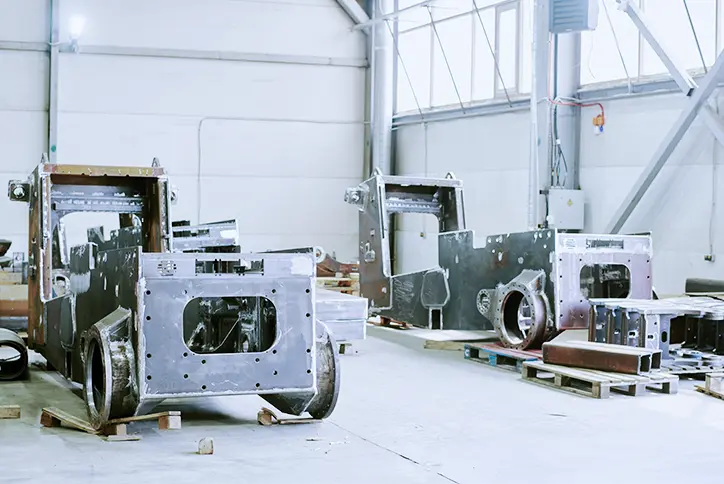
Outsourcing sheet metal assemblies is not always the same as outsourcing product assembly. For many custom metal projects, assembly is part of the fabrication process. A guard may need hinges and latches installed before delivery, a chute may need welded sections checked for fit, or an enclosure may require welding and fasteners before it can be installed or sent into a larger build. This is when a custom sheet metal fabrication partner can provide additional value. Customers receive fabricated parts that are closer to being ready for installation.
The Assembly Depends on Fabrication Fit-Up
Some sheet metal assemblies cannot be treated as separate parts that come together later. Features, such as bend angle or hole location, can affect whether the finished assembly fits. If a formed part is cut by one supplier, bent by another, welded elsewhere, and fitted up later, small differences can add up fast.
A fabrication partner can catch fit-up issues while the work is still adjustable. The fabrication work can be checked against the assembly before the part moves too far into finishing or installation and makes the change more expensive. The review is harder when each operation is treated as a separate transaction instead of part of one build sequence.
The Part Has to Fit Existing Equipment or Field Conditions
Replacement equipment components, such as guards or flashing, are often designed around existing conditions. A drawing will include all a part’s dimensions and tolerances, but it may not show interference with nearby equipment, damaged mounting points, restricted access, or installation constraints.
Custom fabrication gives the shop the opportunity to account for those field conditions before the work progresses. The fabricator can determine whether the assembly should be split into sections, whether mounting locations need adjustment, and whether the finished piece can be installed without unnecessary cutting, drilling, or rework in the field.
Hardware Placement Affects Fit, Access, or Service
Placement of hardware (e.g., hinges, latches, and handles), along with mounting holes and access openings, is carefully designed because it can affect functionality if placement is not considered. Without careful consideration, issues can occur, such as obstructions preventing doors from opening properly, misaligned parts, and challenging access for maintenance teams.
Accounting for hardware during fabrication can reduce downstream labor and prevent avoidable fit problems. It also allows the shop to check alignment while the assembly is still in a controlled environment, before the part reaches a jobsite, OEM floor, or maintenance crew.
A Small Run, Prototype, or Replacement Part Needs to Be Built Correctly
Many fabricated sheet metal assemblies are not high-volume production jobs. They may be one-off replacement parts, repair components, prototypes, job-specific architectural pieces, or short-run equipment parts. While repeatability is important in those cases, the bigger risk is often whether the first part fits and functions without expensive rework. A custom fabrication partner can build the first part to the specifications. If there are issues, they can be corrected before additional components are fabricated and assembled.
One Supplier Can Reduce Handoffs
Complex fabricated assemblies often move through several steps: cutting, forming, punching, rolling, welding, grinding, fastening, hardware installation, and sometimes installation support. Sending those steps to different vendors can create schedule gaps, communication problems, duplicated inspections, and unclear responsibility if the final piece does not fit or there is an issue with it.
Keeping more of the process with one fabricator reduces the number of places where information can be lost. The same shop sees how earlier decisions affect later steps, controls the sequence, and has clearer responsibility for the finished assembly. If something is off, the issue does not have to be traced across several vendors before it can be corrected.
Work With S&R Sheet Metal on Custom Sheet Metal Assemblies
S&R Sheet Metal is a good fit when a sheet metal assembly needs real fabrication work from people who understand how metal behaves in the shop and in the field. S&R helps customers turn drawings, specifications, sketches, and replacement needs into fabricated assemblies built for the application. If you need a custom sheet metal assembly that has to fit, install correctly, and hold up over time, contact S&R Sheet Metal to talk through your project requirements and request a quote.