
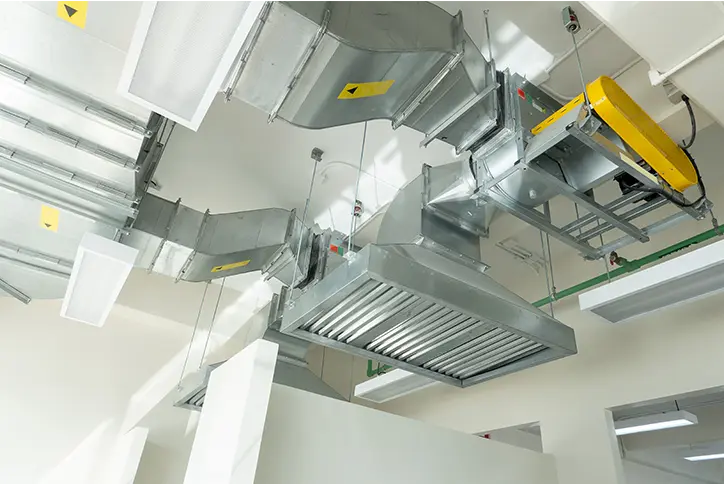
Choosing a subcontract sheet metal fabrication partner requires more investigation than finding a shop with the right equipment. While equipment matters, complex projects require a supplier with reliable quality systems, fast and reliable lead times, the capacity to manage changing requirements without slowing production, and broad fabrication capabilities. The right partner can help reduce lead times, improve consistency, and keep demanding projects moving from prototype through production.
Look For High Quality With Consistency
Quality is the extent to which a set of inherent characteristics of a product or component fulfills requirements from a customer, regulation, or an industry standard. When a fabricator says they manufacture quality products, it’s not much different than saying they provide service without explaining whether it’s excellent or poor. Quality needs a qualifier, such as ‘poor’ or ‘high,’ because the word only refers to the degree to which requirements are met. High quality means a high degree of conformity with the requirements.
Delivering high-quality products consistently should be a baseline expectation in subcontract sheet metal fabrication. Unfortunately, this isn’t always the case. A product made correctly once may meet requirements, but the process would not be considered consistently capable without uniform performance and batch-to-batch repeatability. For buyers, the question is whether the fabricator has the people, equipment, inspection practices, and production controls needed to repeat the same result across parts, batches, and project phases.
Consistent, high-quality fabrication requires controlled processes that yield the same results across batches. In complex sheet metal fabrication, cutting, forming, welding, finishing, and handling all affect fit, function, and consistency. A strong fabrication partner should have documented inspection checks, repeatable production methods, capable equipment, and experienced employees who understand how each step affects the finished part. Small errors in layout, tolerances, weld quality, or handling can create delays, rework, and fit problems later in the project.
Long Lead Times Can Cost You
Getting your product into the marketplace quickly is paramount for new product launches and increases in demand. Long lead times delay sales and revenue, particularly if customers are forced to find an alternate product. Some feel they must tolerate long lead times and stockpile inventory to account for them, but these incur holding costs and tie up space that could be better utilized.
Emergencies and mistakes happen. There is an unexpected spike in orders, the production schedule is disrupted when a line goes down, requiring different components, or a projection was miscalculated. All of these may require a rush order. If your fabricator has long lead times and can’t help you out, the operation is in trouble.
Sometimes, there are material acquisition issues and supply chains beyond the fabricator’s control, but a fabricator concerned about lead times will hold a selection of commonly used sheet metal in inventory. Other times, poorly controlled operations, reactive production management, and disorganized internal workflows create unnecessary delays.
Of course, short lead times mean nothing without reliable on-time delivery. If a company promises short lead times but delivers on time infrequently, it is worse than a long lead time. Often, you can plan for a long lead time in regular production, but if you plan for a short lead time and the fabricated components do not arrive, the delay can shut down your lines and cost you more money.
Broad Capabilities Save Time and Improve Quality
Complex projects often require many steps and capabilities to complete the project, such as designing, cutting, bending, punching, rolling, welding, grinding, assembly, and sometimes installation. When you subcontract sheet metal fabrication for complex projects, choosing a partner with broad capabilities under one roof can save time by reducing coordination points between suppliers and the risk of miscommunication.
When all aspects of a fabrication project are handled by a single provider, the provider has greater control over the fabrication and assembly process. They can manage how each step impacts the next. For example, forming decisions can affect welding fit-up, and finishing requirements can affect material handling. If one company bends parts without considering the next steps and sends them to another company for assembly, a fit issue can create confusion over who is responsible, leading to delays and possibly scrap. When a single fabricator handles all steps, consideration is given to all project steps before beginning, and issues are caught and corrected early. There is stronger accountability and less finger-pointing when tolerance, finish quality, or fit are wrong. A supplier that can support prototyping, small runs, and production is better positioned to carry lessons from early builds into later production, resulting in consistency across production runs.
Additionally, having a fabricator with comprehensive capabilities reduces project management burden for you or your buyer. The buyer does not have to coordinate several suppliers, manage separate purchase orders, track multiple schedules, or resolve conflicts between vendors.
Subcontract Sheet Metal Fabrication To S&R
S&R is a strong fit for complex sheet metal fabrication projects that require skilled fabrication, problem-solving, and dependable execution. Our team understands how metal behaves during cutting, forming, bending, and assembly, helping prevent fit issues, poor workmanship, and unnecessary rework. Our customers rely on us for responsive lead times and realistic delivery commitments, especially when a project schedule, production line, or job site depends on getting the right part quickly. With capabilities across custom fabrication, laser cutting, press brake forming, industrial fabrication, architectural metal, and design support, S&R helps customers turn complex requirements into finished parts that fit, function, and hold up in the real application.
Contact us for a quote on your next complex sheet metal project.